Restoring Bakelite: Cracks, Fractures, and Missing Pieces

Bakelite is a hard, somewhat brittle plastic. It was widely used for steering wheels on cars and tractors, radios, household appliances, electrical switches, and much more. Over time, Bakelite can get damaged. It cracks or breaks, and sometimes entire pieces go missing. In this article, you will learn how to easily repair Bakelite in three simple steps.


Step 1. Preparation

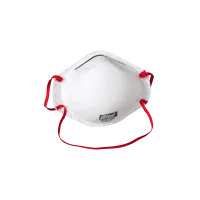
Start by roughening the damaged areas of Bakelite. You can grind out cracks using a small cutting disc on a Dremel tool. Where pieces are missing, sand thoroughly using coarse sandpaper (60 grit). Always wear respiratory protection, such as a P3 dust mask, while sanding. Now clean and degrease everything thoroughly using a solution of ammonia and water to make it dust-free and grease-free. Once the Bakelite is fully dry, you can proceed to the next step: repairing the Bakelite.


Step 2. Repairing Bakelite

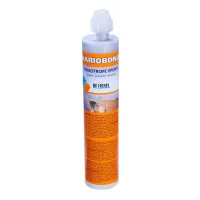
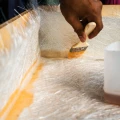
Mix thixotropic epoxy with a pigment matching the color of the Bakelite. This is usually black, but sometimes cream, reddish-brown, or another shade. Add hardener to the thixotropic epoxy, mix thoroughly, and apply it into the cracks and missing sections. Thixotropic epoxy can also be used as an adhesive to glue broken pieces back together. Shape the epoxy as closely as possible to the original form. Complex areas may need to be built up in 2 or more layers.

Wear nitrile gloves during this work to prevent skin contact with epoxy.

Now sand the repair areas into the correct shape. This can be done with coarse sandpaper (60 grit), followed by finer sandpaper (120 grit, then 180 grit).


Step 3. Finishing the repair

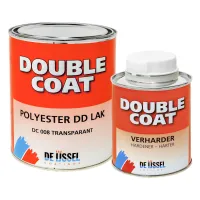
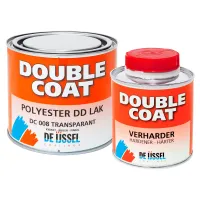
Once the repairs are sanded, the entire object can be lightly sanded using 280-grit sandpaper. The Bakelite can then be finished with a topcoat. When Bakelite is subject to heavy use, such as a steering wheel, we recommend using Double Coat DD Paint. This paint is available in high gloss, semi-gloss, and matt finishes and is highly resistant to dirt, chemicals, and wear. The paint can be applied directly without primer onto both the Bakelite and the epoxy.


Need more information?

In the article above, you learned how to repair Bakelite using epoxy. If you have any questions about the products or procedure, please feel free to contact our customer service team!
Product advisor
  • Expert advice
  • Superfast delivery with PostNL
  • Pay after delivery

Products used in this article

Product 1 of the 6

DIY Projects with Epoxy, Polyester, and PU Foam

Here you can find all 34 related articles on this topic. Mis je informatie om aan de slag te gaan met jouw klus? Neem dan contact met ons op.

Polyester for Beginners Polyester for Beginners
What is polyester resin and what can you use it for? In this article, we explain the basics of working with polyester resin. At Polyestershoppen, you will find… More information
Epoxy for Beginners Epoxy for Beginners
At Polyestershoppen, you will find all the information you need about epoxy for beginners. Would you like to work with epoxy resin but don't you know where to s… More information
DIY | Making a Polyester Pond DIY | Making a Polyester Pond
Making a polyester pond has many advantages and is relatively easy to do yourself. If you make your own pond, you will save a lot of money! With the help of a… More information
Guide to Polyester Repair Guide to Polyester Repair
Polyester is a material that is easy to repair with materials that are easy to process. An average do-it-yourselfer can easily carry out polyester repairs. On t… More information
Covering an Object with Polyester Covering an Object with Polyester
Covering an object with polyester has a number of important advantages: the object is strengthened, becomes water-resistant and is easy to colorize. Coating wit… More information
Casting an Object in Epoxy Casting an Object in Epoxy
Do you want to cast an object in epoxy? Then you are in the right place. In this article we explain how you can properly protect an object against external infl… More information
How Do I Clean My Materials? How Do I Clean My Materials?
If you process polyester and epoxy resins on a regular basis, it is customary to clean all tools such as vent rollers, Japan spatulas e… More information
The Differences Between Fiberglass, Carbon Fibre, and Aramid Fibre The Differences Between Fiberglass, Carbon Fibre, and Aramid Fibre
To create a strong yet lightweight construction, a polyester resin or epoxy resin is combined with a reinforcing fibre. These reinforcing fibres are availa… More information
Repairing a Camper Roof Repairing a Camper Roof
Over time, (hairline) cracks may appear in the polyester roof of your camper causing roof leaks. Repainting often does not give the desired result, especia… More information
Coating an Object with Carbon (Overlay) Coating an Object with Carbon (Overlay)
Making a carbon overlay with real carbon fabric (carbon) is not difficult. In this article we explain step by step how to achieve optimal results!  Suppli… More information
Finishing Metal and Plastic with Double Coat DD Paint Finishing Metal and Plastic with Double Coat DD Paint
You can give a metal or pastic surface a fine finish with Double Coat DD Paint. In this article we explain step by step how to do this. DD Paint is a 2-componen… More information
How to Tint Gelcoat How to Tint Gelcoat
In order to achieve an almost invisible gelcoat, the new gelcoat to be applied must have the exact colour of the surrounding gelcoat. It is often not possible t… More information
How to Make a Polyester Mould How to Make a Polyester Mould
If you want to make multiple polyester products, you can use a mould. You can then work faster and more efficiently. It is important that the mould is of good q… More information
Repairing Rotten Wooden Window Frames with Epoxy Repairing Rotten Wooden Window Frames with Epoxy
Wood rot is a form of wood decay that occurs when wood is exposed to moisture for a long time. This moisture allows fungi to grow in the wood, which breaks dow… More information
Finishing Concrete Countertops and Sinks with Epoxy Finishing Concrete Countertops and Sinks with Epoxy
Epoxy finishing concrete countertops, sinks, water ornaments and garden statues is a good way to get a smooth surface that is waterproof and easy to keep c… More information
How to Waterproof a Wooden Hot Tub How to Waterproof a Wooden Hot Tub
Hot tubs are extremely popular for enjoying a relaxing soak in your own garden. Most hot tubs are made of wood, a material that not only provides excellent insu… More information
Covering EPS and XPS Foam With Epoxy Covering EPS and XPS Foam With Epoxy
EPS (Expanded Polystyrene) and XPS (Extruded Polystyrene), often referred to as styrofoam, Roofmate, or insulation board, are cost-effective materials that are… More information
Restoring Bakelite: Cracks, Fractures, and Missing Pieces Restoring Bakelite: Cracks, Fractures, and Missing Pieces
Bakelite is a hard, somewhat brittle plastic. It was widely used for steering wheels on cars and tractors, radios, household appliances, electrical switches, an… More information
Repairing a Plastic Shower Tray with Polyester or Epoxy Repairing a Plastic Shower Tray with Polyester or Epoxy
Plastic shower trays sometimes get damaged due to wear and tear, renovations, or age. In this article, we cover the most common types of damage and show you how… More information
Degassing Casting Resin with Vacuum | Tips & Guide Degassing Casting Resin with Vacuum | Tips & Guide
After mixing silicone rubber, epoxy casting resin or polyester casting resin, a lot of air can enter the material. These air bubbles can lower the quality… More information
DIY | How to Make a Cosplay Shield DIY | How to Make a Cosplay Shield
How do you make your own beautiful shield that you often see on TV or at cosplay conferences? You can make one out of metal but that is very heavy and not easy… More information
DIY | How to Make an Aquarium Background with Epoxy DIY | How to Make an Aquarium Background with Epoxy
As an aquarium or terrarium fan, you will probably want to make your own back wall. The advantages are that a homemade back wall always fits exactly and looks e… More information
Epoxy Tips for a Perfect Bathroom Finish Epoxy Tips for a Perfect Bathroom Finish
Many Polyestershoppen customers have now renewed their bathrooms using epoxy. You can do various jobs in your bathroom with, for example, our epoxy floor coati… More information
Insulating a Bus with Sprayable PU Foam Insulating a Bus with Sprayable PU Foam
Do you want to convert a van into a camper van or use it as a refrigerated vehicle? Then you need to insulate the van well to limit the costs of keep the van a… More information
Insulating a Roof with Sprayable PU Foam from Froth-Pak Insulating a Roof with Sprayable PU Foam from Froth-Pak
High energy bills? Time to do something about it! Of course, there are many steps you can take to make your home more energy-friendly. In many old houses or ol… More information
How to Laminate a Surfboard with Carbon Fibre and Epoxy How to Laminate a Surfboard with Carbon Fibre and Epoxy
In order to achieve a perfect laminate and ideal fibre to resin ratio, the industry often uses the vacuum wet bagging method. This method involves applying a va… More information
Bonding Various Materials Bonding Various Materials
Are you looking for the right products to bond different materials? We have a wide range of professional adhesives for bonding metal, iron, aluminum, wood, plas… More information
Tips and Tricks for Working with Froth-Pak Insulation Foam Tips and Tricks for Working with Froth-Pak Insulation Foam
In this article you can read everything about PU foam from Froth-Pak. We explain to you what the benefits of Froth-Pak are and what you need to process it. We h… More information
Wood Stabilisation with Stabicure: The Solution for Strong and Durable Woodd Wood Stabilisation with Stabicure: The Solution for Strong and Durable Woodd
Stabicure is a revolutionary method in the field of wood stabilisation. It is a process in which wood is impregnated with a special resin, also known as "c… More information
DIY | Make Your Own Epoxy Putty DIY | Make Your Own Epoxy Putty
Epoxy putty (filler) is a versatile and durable material that is often used to fill cracks, holes and other irregularities in various surfaces. Did you know tha… More information
Container Insulation with Froth-Pak PU Foam Container Insulation with Froth-Pak PU Foam
Insulating a container is an essential step for maintaining temperature and protecting it from external influences. In this article, you can read how to easily… More information
Bonding Polyethylene (PE) and Polypropylene (PP) Bonding Polyethylene (PE) and Polypropylene (PP)
Polyethylene (PE) and Polypropylene (PP) are notoriously difficult materials to bond. Common adhesives do not work, epoxy does not adhere to them and welding is… More information
Protecting Wood with Epoxy and DD Paint Protecting Wood with Epoxy and DD Paint
We regularly receive questions about how to properly protect wood. In this article, you’ll learn how to optimally protect wood using a combination of epox… More information
Thickening Epoxy and Polyester? How to Choose the Right Filler! Thickening Epoxy and Polyester? How to Choose the Right Filler!
Although polyester and epoxy resins are naturally low-viscosity, it can sometimes be useful to thicken them with fillers for various applications. This is easil… More information

Do you have a question about this article?

Do you have a specific question? Call one of our specialists for free advice +3185 0220090